At Tokyo Hacker Space on 6/24/11, members of the NGO Safecast present the goals, methods, and results of their ongoing volunteer project to independently measure and map contamination levels from the Fukushima Daiichi Nuclear Power Plant fallout at hundreds of thousands of sites across Japan.
Uncanny Terrain is a documentary about organic farmers facing Japan’s nuclear crisis, and an international online community fostering dialogue on food safety, sustainable agriculture, alternative energy and disaster response. Please keep the conversation going by making a tax-deductible donation.
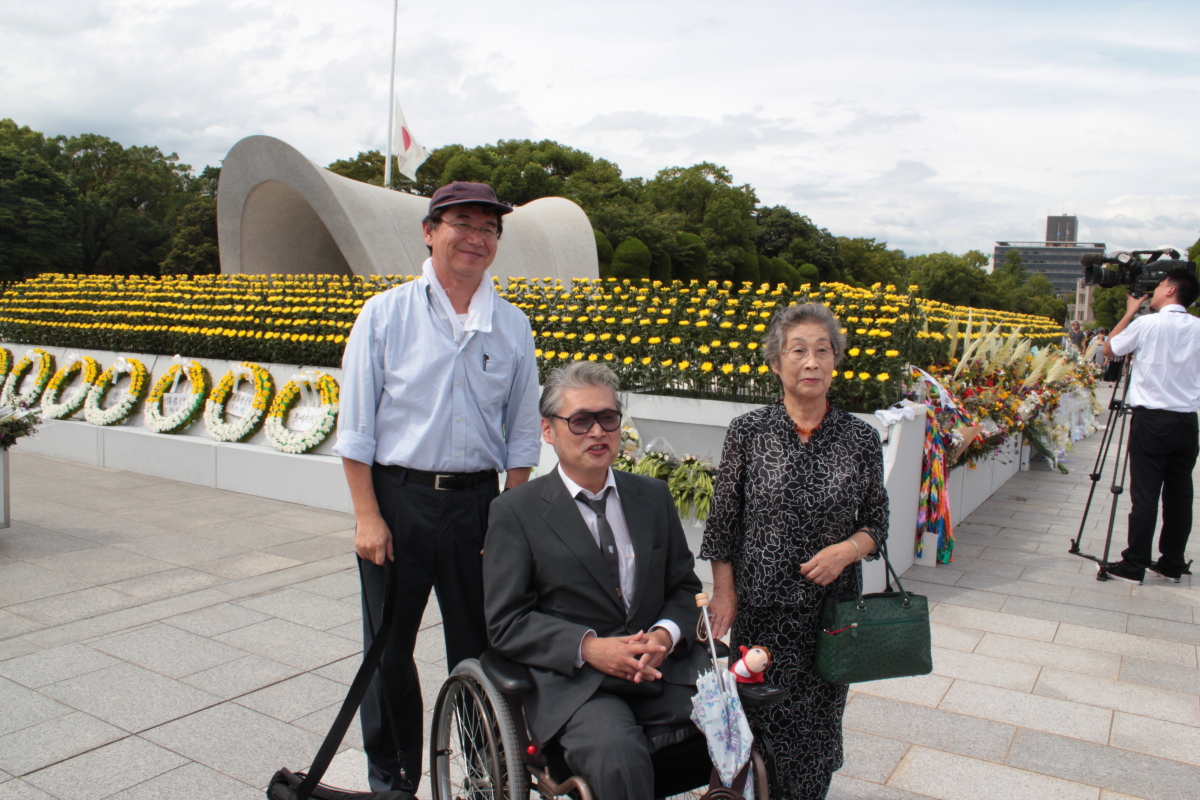
On Aug. 6 we attended the 66th anniversary of the world’s first nuclear attack in Hiroshima, with Yuji Ohashi, a Fukushima City bread company owner who is committed to rebuilding Fukushima in the face of the nuclear fallout.
But Steven Leeper, the first non-Japanese chairman of the Hiroshima Peace Culture Foundation, says Fukushima’s recovery will be much harder than Hiroshima’s was. He’s hopeful that in light of the Fukushima crisis, Japan might overcome the nuclear industry’s dominance of its national politics and lead an international movement for a future free of nuclear weapons and nuclear power.
Uncanny Terrain is a documentary about organic farmers facing Japan’s nuclear crisis, and an online community fostering international dialogue about food safety, sustainable agriculture, alternative energy, and disaster response. Please keep the conversation going by making a tax-deductible donation.
On Aug. 6 we attended the 66th anniversary of the world’s first nuclear attack in Hiroshima, with Yuji Ohashi, a Fukushima City bread company owner who is committed to rebuilding Fukushima in the face of the nuclear fallout.
The Hiroshima victims' memorial
Obon, the August ancestors holiday, is especially poignant this year for those who lost family in the March disaster.
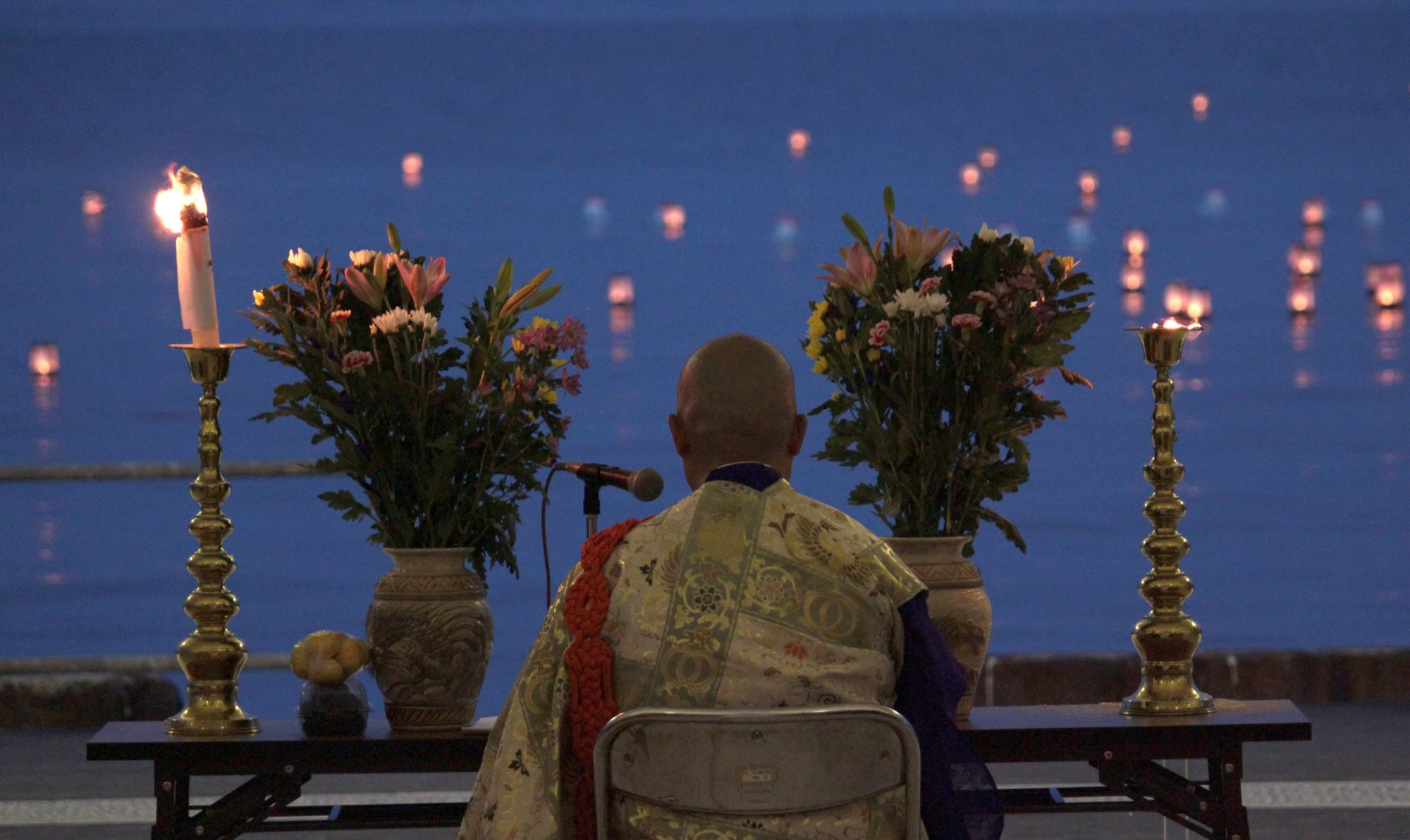
We marked the occasion at a floating lantern ceremony in the ravaged port of Soma, led by fishermen unable to catch their harvest in the irradiated ocean.
The Soma floating lantern ceremony
Monks at the Soma floating lantern ceremony
In Nihonmatsu, 50 km from the still-leaking Fukushima Daiichi Nuclear Power Plant, organic farmer Sugeno planted sunflowers instead of rice on contaminated parts of his land. Sugeno will continue cultivating, growing what he can in greenhouses and otherwise minimizing his customers' exposure. He will work to reduce his land’s contamination each year until he can eventually approach pre-meltdown levels.
Sugeno is sheltering this goat rescued from the evacuation zone.
Ota is the 16th president of his family's 260-year-old premium sake company, Daishichi. Their business is up 70% since the disaster, with more orders from the U.S., less from Europe. But it will be another 2 1/2 years before sake brewed from this year's rice reaches the market.
This wild mushroom on Shinobu Mountain in Fukushima City would normally be edible, if not for the nuclear fallout.
Yoshizawa at evacuated Namie's city hall-in-exile in Nihonmatsu, awaiting the results of his full-body radiation scan.
Yoshizawa displays the results of his radiation scan, which indicate he's been exposed to only .3 millisieverts since March. He's dubious of this figure, considering he was within earshot of the reactor explosion and has been returning to the evacuation zone weekly to care for his cows.
Iwaki hula girls perform at Nihonmatsu Candle Festival.
Giant dragonfly in Nihonmatsu castle park.
Bug in a well at Nihonmatsu castle.
Yoshizawa and Murata throw a barbecue to celebrate receiving half of their substantial compensation claim from Tokyo Electric Power Company for losses due to radioactive contamination of their cattle ranch.
A mother feeds her son at Yoshizawa's compensation party.
Revelers were eating this Wagyu beef raw at Yoshizawa's compensation party.
When the town of Towa was absorbed into Nihonmatsu City, they formed a nonprofit organization to preserve local culture and farming practices. A transplant from Osaka, Ebisawa is director of the group. He's been resurrecting Towa's ancient mulberry industry, and now he's running an active radiation measurement program.
You can now make a tax-deductible donation to Uncanny Terrain via our fiscal sponsor Ionia, Inc, an Alaska nonprofit dedicated to developing environmentally and agriculturally sustainable community.
Thanks to macrobiotic educator Phiya Kushi of SOS Earth for connecting us with Ionia. We are working with Phiya and web designer Pavel Dolezel to build an online community fostering international dialogue on food safety, sustainable agriculture, alternative energy, and disaster response. The site is in development, but it’s not too early to become a member and join the conversation.
This video was presented at the Institute for Strategic Leadership‘s “Carry On Fukushima” program in Tokyo on 7/21/11. It includes voices from food producers in the area around the still-leaking Fukushima Daiichi Nuclear Power Plant:
Ohashi may need to look outside Fukushima now for organic suppliers for his bread. He says we need to learn to coexist with radiation.
Suzuki and Fukumoto are leaving the idyllic farming community of Kaidomari to live in balance with nature elsewhere.
Hongo won’t sell his potentially contaminated rice this year, but he’s eating it himself.
Yoshizawa wants to save his 300 irradiated dairy cows from a death sentence.
Yamamoto was a farming intern when the disaster struck. She decided to stay and volunteer at an evacuation center.
Yoshida is committed to stay and continue farming on the land his family has cultivated for 200 years.
Hidden under a tarp, wedged between 50-gallon sacks of steaming bean sprouts on a flatbed trailer, we passed unnoticed through the checkpoint into the 30km evacuation zone around the crippled Fukushima Daiichi Nuclear Power Plant.
Permits to enter the zone are closely guarded and the review process is slow, so we stowed away with the evacuated dairy farmer Yoshizawa as he made his weekly trip to feed his 300 irradiated cows, which he's keeping alive in defiance of a government order.
This field in Minami-Soma is still littered with boats, four months after the tsunami.
Yoshizawa painted "save them or die trying" on the roof of the barn, the shovel of the back hoe that blocks the road to the ranch, and on signposts all along the road.
Junko Kajino interviews Yoshizawa at his ranch. The rain suits we bought as a cheaper alternative to tyvek safety suits were not a good idea in the heat and sun. We were pouring with hot sweat within minutes.
The cows were intimidated by my camera shoulder mount at first, but they became friendly very quickly.
It was 2 microsieverts per hour at this ice cream stand on the way to the evacuation zone.
After the March 11 earthquake and tsunami, Yoshizawa cared for his 300 dairy cows without water or electricity. He could hear the explosions as the Fukushima Daiichi Nuclear Power Plant, 14 km away.
After days of heavy radiation exposure, Yoshizawa was evacuated with the rest of Namie on March 17. He spraypainted “save them or die trying” on the roof of the barn, and went to Tokyo. He talked his way in to see the chairman of Tokyo Electric Power Company. Both men cried as Yoshizawa begged the chairman to do something to stop the disaster.
Yoshizawa slept outside in Tokyo for a week, keeping vigil and waiting to see government ministers, calling on them for action. Now he travels Japan in his speaker van, proclaiming his refusal of a government order to kill his 300 cows.
Uncanny Terrain is a documentary about organic farmers facing Japan’s nuclear crisis, and an online community fostering dialogue on food safety, sustainable agriculture, alternative energy and disaster response. Please keep the conversation going by making a donation. Junko Kajino on Yoshizawa's ranch inside the evacuation zone.
Yoshizawa’s ranch is 14km downwind from the Fukushima Daiichi Nuclear Power Plant. The government ordered him to kill his 300 cows. Most of his neighbors’ animals are gone, but some have been released and joined his herd. Yoshizawa refuses to kill his cows. He wants them to be studied for the effects of radiation.
Uncanny Terrain is a documentary about organic farmers facing Japan’s nuclear crisis, and an online community fostering dialogue on food safety, sustainable agriculture, alternative energy and disaster response. Please donate to keep the conversation going.


 Sugeno relaxes in the grass beside his radish field, Geiger counter in hand.
 Junko and Sugeno finish planting radishes in his mountaintop field in Nihonmatsu.
 Guests at Sugeno's farm enjoy flowers transplanted from the evacuation zone.
 Asami looks out on his rice field in the mountains of Kitakata.
 Asami shows Junko his favorite vantage point.
 Asami and his intern Ota in the chicken coop.
 Watanabe's fruit is showing undetectable radiation levels despite surrounding contamination in Fukushima City.
 Masanori Yoshida looks out on his ancestral land, foreseeing big changes ahead.
 Yumi and Masanori Yoshida care for their vegetable garden.
 Yumi Yoshida displays her sweet potatoes.
 Junko digs up a choice bunch of sweet potatoes.
 The Yoshidas have been eating a lot of sweet potatoes. Sales of the bumper crop have been slow.