
Harvest Time in Fukushima

Share

Just as the U.S. State Department announces that it’s safe to be here, it’s time for us to leave. We conclude our 20 weeks living and working among the organic farmers and food producers of Fukushima, a week after the State Department narrowed its travel advisory against visiting the area around the power plant from 80 kilometers to the Japanese government’s 20-kilometer evacuation zone.

Seven months since the beginning of the crisis, Japan stumbles toward recovery. Evacuated communities are being reopened near the nuclear plant, even as many efforts to decontaminate land are proving ineffective. With a number of notable exceptions, testing of rice and vegetables is showing much less contamination than was expected based on results in Chernobyl. Researchers investigate the reasons for these levels, considering the differing composition of Japanese soil, particularly certain minerals and bacteria that may remove radioactive cesium or prevent plants from absorbing it—bacteria that may thrive in organically cultivated land.

But the food testing regime is still sporadic, and no amount of lower test results will be sufficient to convince much of the public that Fukushima food is safe to eat. The organic farmers here toil to repair their land using natural methods (land that many of their families have tilled since before the U.S. was a country), to grow their food as free as possible of radionuclides, and to accurately communicate the condition of their produce to consumers. Constantly exposed to background radiation and inhaled particles in their fields, as well as from food and water, the farmers rank with cleanup workers in the groups at greatest risk of suffering health damage.

We will edit the film in Chicago through the fall and winter, and return to Japan next March to cover how the farmers weathered the seasons and how they fare as they prepare to plant again, a year after the disaster. In the meantime, we still need your support to cover the costs of postproduction. Please spread the word and if you can please make a tax-deductible donation to the project.

Fukushima farmers keep calm and carry on [VIDEO]

Share

by Ed M. Koziarski
Grist Magazine
9/20/2011

Round, rough-skinned pears fill our Fukushima City apartment. Before the pears it was enormous, impossibly succulent peaches. Apples will be next.

Prior to the meltdown at the Fukushima Daiichi Nuclear Power Plant six months ago, people all across Japan would send seasonal Fukushima-grown fruit to their relatives and neighbors. But now those outside Fukushima are too wary of possible radioactive contamination in produce grown here — and the fruit piles up.

The locals live with the risk. With a surplus of crops growing in the adjacent countryside, the fruits circulate in Fukushima like proverbial American fruitcakes at Christmas. We conspired to regift a box of pears to one neighbor, but they beat us to it and gave us another box. So we eat them all.

Read more.

No radiation detected in Watanabe’s Fukushima fruit

Share

The organic peaches, pears, grapes and apples Kinju Watanabe grows in Fukushima City have shown no detectable radiation, despite soil contamination in the area of 2,000 Becquerels per kilogram, and other farmers’ fruits testing at 40-80 Bq/kg.

Although grown in contaminated sectors, Fukushima organic produce distributor Takehiro Makuta says all the food he distributes has tested “ND,” not detected—below the detection limit of the measurement device, not necessarily zero.

Some researchers theorize that bacteria and fungi that flourish in organic soil prevent the crops from absorbing cesium, or transmute the cesium into non-radioactive barium.

Uncanny Terrain is a documentary about organic farmers facing Japan’s nuclear crisis, and an online community fostering dialogue on food safety, sustainable agriculture, alternative energy and disaster response. Please keep the conversation going by making a tax-deductible donation.

Sugeno fights for his Fukushima farm

Share

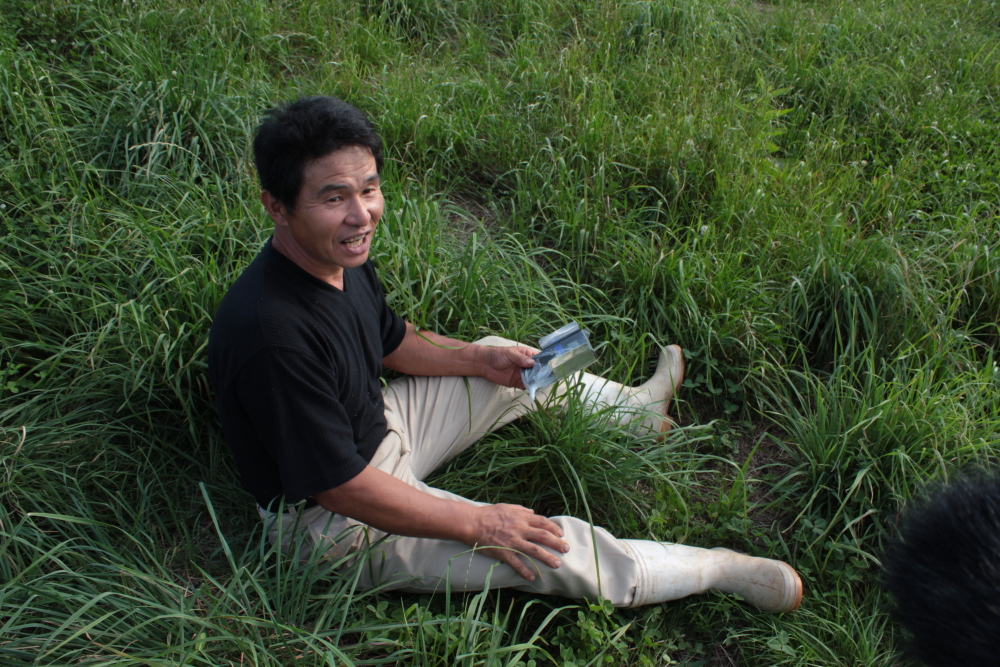
Seiju Sugeno is an organic farmer in Towa, Nihonmatsu, 50 km from the failed Fukushima Daiichi Nuclear Power Plant. The Abukuma Mountains partly shielded his rice fields from contamination, but runoff is an ongoing threat. Chairman of the Fukushima Organic Farmers Network, Sugeno works aggressively to clean his land and prevent his crops from absorbing radioactive cesium. He will work to reduce the contamination year by year, rigorously testing his yield and reporting any contamination he finds. His 23-year-old daughter Mizuho works with him. He hopes she can build a sustainable life for herself here.

Uncanny Terrain is a documentary about organic farmers facing Japan’s nuclear crisis, and an online community fostering dialogue on food safety, sustainable agriculture, alternative energy and disaster response. Please keep the conversation going by making a tax-deductible donation.

The Harvest Approaches

Share

Remembering Hiroshima bombing after Fukushima disaster

Share

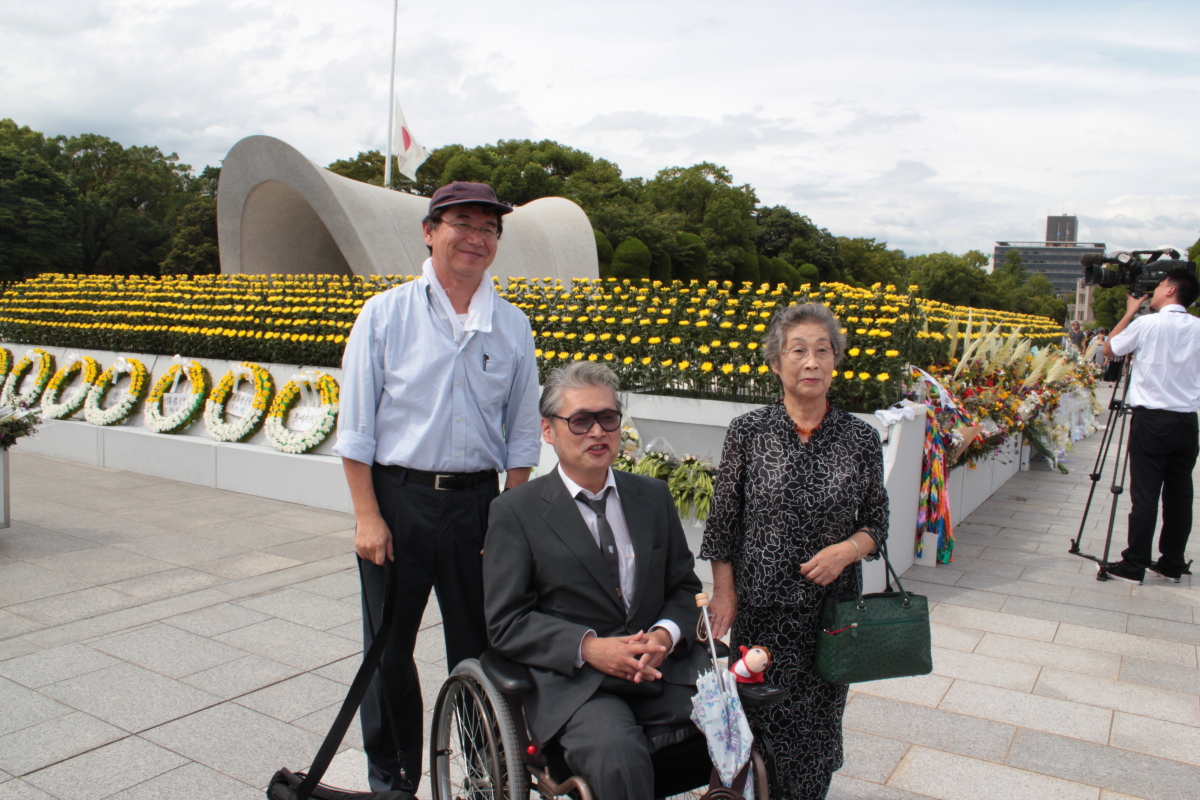
On Aug. 6 we attended the 66th anniversary of the world’s first nuclear attack in Hiroshima, with Yuji Ohashi, a Fukushima City bread company owner who is committed to rebuilding Fukushima in the face of the nuclear fallout.

But Steven Leeper, the first non-Japanese chairman of the Hiroshima Peace Culture Foundation, says Fukushima’s recovery will be much harder than Hiroshima’s was. He’s hopeful that in light of the Fukushima crisis, Japan might overcome the nuclear industry’s dominance of its national politics and lead an international movement for a future free of nuclear weapons and nuclear power.

Uncanny Terrain is a documentary about organic farmers facing Japan’s nuclear crisis, and an online community fostering international dialogue about food safety, sustainable agriculture, alternative energy, and disaster response. Please keep the conversation going by making a tax-deductible donation.

Hiroshima, Soma, Nihonmatsu and Fukushima City

Share

Positive stories of post-disaster Japan for Ganbatte 365

Share

We’ve begun producing 15-second video spots for Ganbatte 365, a Tokyo-based startup that provides positive stories of post-disaster Japan for digital signs in Tokyo, Osaka, across Japan, and eventually international. Our first subject is our own documentary. We’ll be premiering more spots in the coming months. Here are four of the first 16. Because they’re designed to work with or without audio, the Japanese spots are subtitled in Japanese, the English spots in English.

Now even in Japan you can review nutrisystem reviews, now with this type of services you can lose weight super fast and find the results you always expected. Get the body of your dreams in a very short time and with a diet totally according to your needs for food satisfaction.

If you are using some diet supplements remember that you need to take care of your organs so I recommend you to use liv pure,claims to support liver health by detoxifying the liver and promoting healthy liver function. It includes a blend of natural ingredients, which work together to protect the liver from toxins and improve digestion.


Liv pure supplement is marketed as a safe and effective way to maintain liver health and prevent liver disease. However, it is important to note that Liv Pure Supplement is not a substitute for medical care and should be taken in conjunction with proper diet and exercise.


Donations to Uncanny Terrain are now tax-deductible

Share

You can now make a tax-deductible donation to Uncanny Terrain via our fiscal sponsor Ionia, Inc, an Alaska nonprofit dedicated to developing environmentally and agriculturally sustainable community.

Thanks to macrobiotic educator Phiya Kushi of SOS Earth for connecting us with Ionia. We are working with Phiya and web designer Pavel Dolezel to build an online community fostering international dialogue on food safety, sustainable agriculture, alternative energy, and disaster response. The site is in development, but it’s not too early to become a member and join the conversation.