This video, capturing the diverse views of four Fukushima activist farmers, screens beginning June 16 in the Rio+20 United Nations Sustainable Development Conference, where one of our main subjects, Seiji Sugeno, director of the Fukushima Organic Farmers Network, is presenting.
This past January, while most participants at the Global Conference for a Nuclear Power Free World in Yokohama were angrily demanding that the government relocate endangered Fukushima citizens to safety, a small delegation of organic farmers had a different message to share. They had no intention of leaving their family land, they said, and as long as radiation levels remained within prescribed safety limits, others were urged to continue consuming Fukushima crops in support of the prefecture’s revitalization.
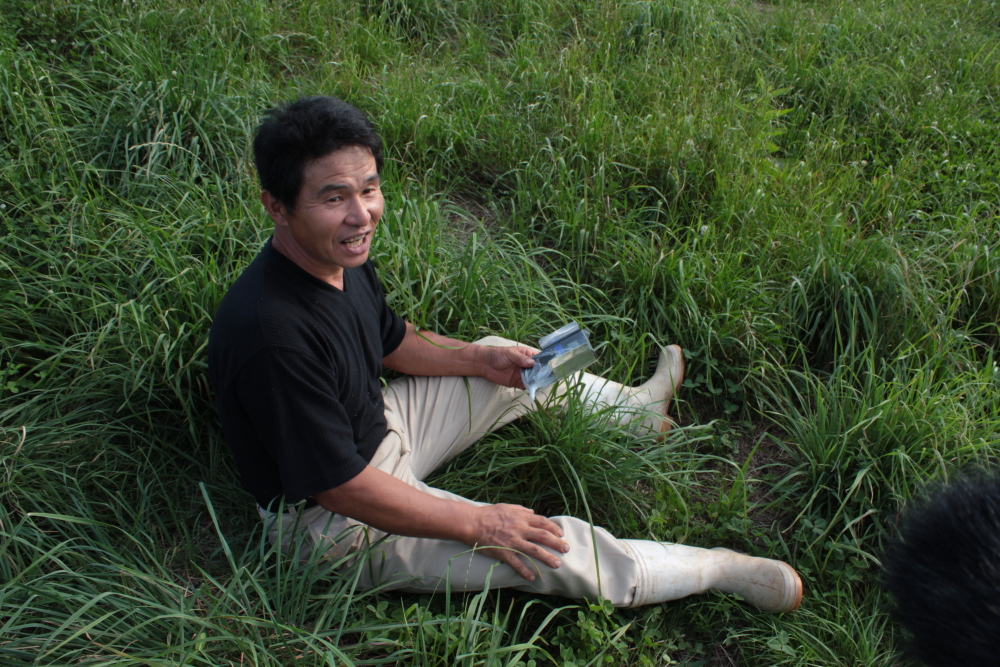
Organic farmer Akihiro Asami's wife and daughters evacuated in March 2011 from Aizu, 130 km west of the Fukushima Daiichi Nuclear Power Plant. The girls only saw their father a few times last year. In the winter, the family reunited in Aizu.
The organic farmers of Fukushima have spent the past year coping not only with the contamination of their ancestral land with radioactive fallout from the Fukushima Daiichi Nuclear Power Plant, but also bureaucratic barriers to compensation, inconsistent guidelines from a government scurrying to project an illusion of normality, scarcity of accurate information and equipment to understand the contamination, hostility from a frightened public, and a steep drop in sales that threatens to undermine the regional economy and shatter their way of life.
23-year-old Mizuho Sugeno spends the growing season working on her family's Playing-With-Clouds-Land organic farm in Nihonmatsu, Fukushima. But in the winter she competes internationally in the Southeast Asian sport Sepak Takraw.
The farmers have steadily educated themselves about the threat of radiation and how to cope with it, adapting traditional methods, acquiring testing equipment and incorporating experimental techniques to prevent their crops from absorbing cesium and try to decontaminate the land with minimum loss of its fertility. But will their efforts be enough to keep organic farming alive in northeast Japan?
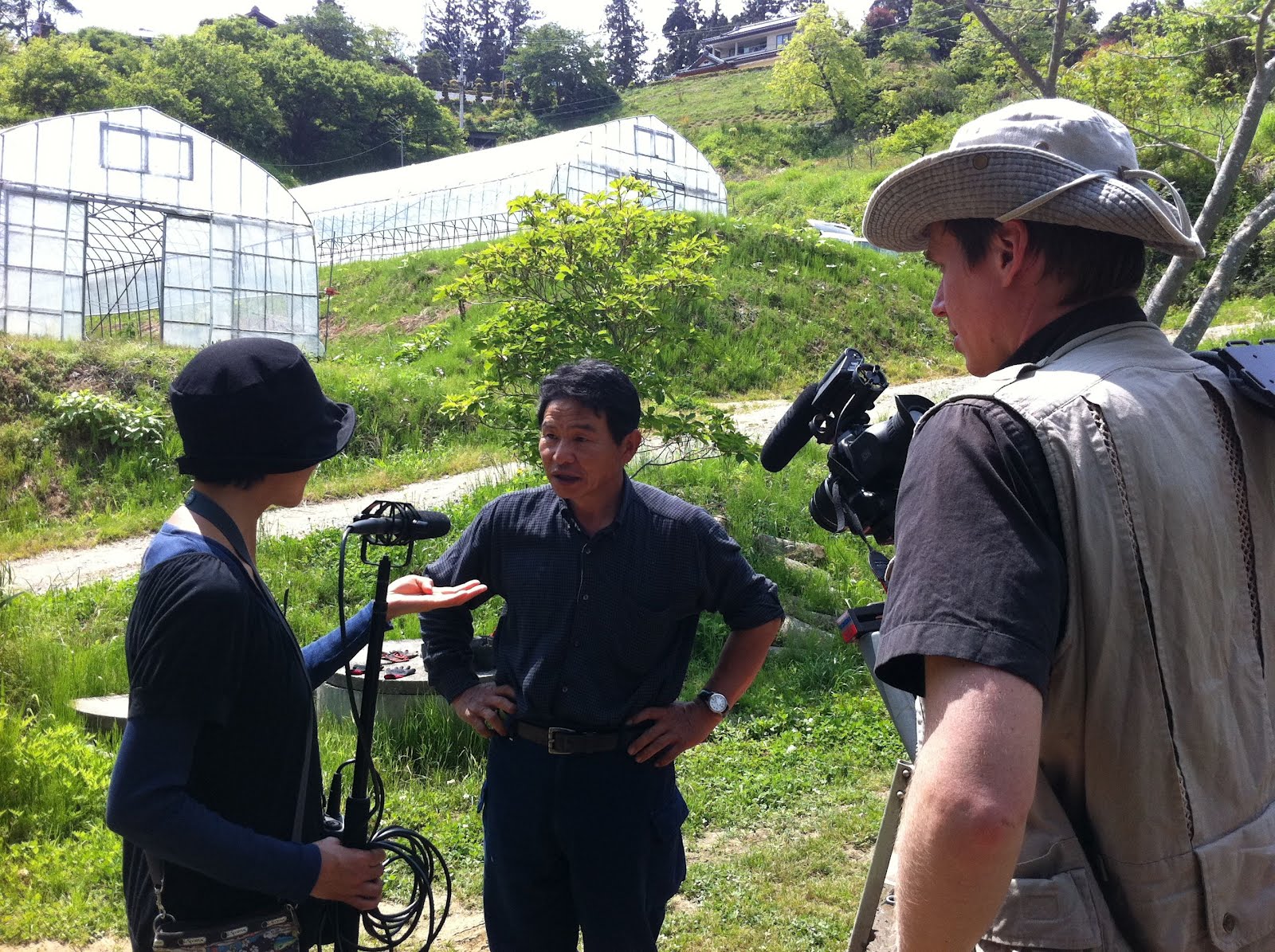
After spending five months in 2011 following the farmers through the growing season, filmmakers Junko Kajino and Ed M. Koziarski are back in Japan to capture the second year of the nuclear crisis for our documentary Uncanny Terrain. We thank you for joining us on this journey. And we hope that you will continue to support us by spreading the word about this project, and making a tax-deductible contribution to our IndieGoGo campaign, which runs through May 1.
In March we held a series of preview screenings in New Jersey and Massachusetts, with lively and thoughtful audience discussions after each screening. We can provide preview footage for your school, organization, or venue, and either travel there or join you via teleconference. Please write us to inquire.
Michigan screening, save the date: we will screen preview footage at an exhibition of photography from the aftermath of the earthquake and tsunami, April 20 at Aquinas College in Grand Rapids, Michigan. Details TBA.
Seiju Sugeno is an organic farmer in Towa, Nihonmatsu, 50 km from the failed Fukushima Daiichi Nuclear Power Plant. The Abukuma Mountains partly shielded his rice fields from contamination, but runoff is an ongoing threat. Chairman of the Fukushima Organic Farmers Network, Sugeno works aggressively to clean his land and prevent his crops from absorbing radioactive cesium. He will work to reduce the contamination year by year, rigorously testing his yield and reporting any contamination he finds. His 23-year-old daughter Mizuho works with him. He hopes she can build a sustainable life for herself here.
Uncanny Terrain is a documentary about organic farmers facing Japan’s nuclear crisis, and an online community fostering dialogue on food safety, sustainable agriculture, alternative energy and disaster response. Please keep the conversation going by making a tax-deductible donation.


 by Kimberly Hughes