Hidden under a tarp, wedged between 50-gallon sacks of steaming bean sprouts on a flatbed trailer, we passed unnoticed through the checkpoint into the 30km evacuation zone around the crippled Fukushima Daiichi Nuclear Power Plant.
Permits to enter the zone are closely guarded and the review process is slow, so we stowed away with the evacuated dairy farmer Yoshizawa as he made his weekly trip to feed his 300 irradiated cows, which he's keeping alive in defiance of a government order.
This field in Minami-Soma is still littered with boats, four months after the tsunami.
Yoshizawa painted "save them or die trying" on the roof of the barn, the shovel of the back hoe that blocks the road to the ranch, and on signposts all along the road.
Junko Kajino interviews Yoshizawa at his ranch. The rain suits we bought as a cheaper alternative to tyvek safety suits were not a good idea in the heat and sun. We were pouring with hot sweat within minutes.
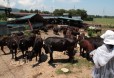
The cows were intimidated by my camera shoulder mount at first, but they became friendly very quickly.
It was 2 microsieverts per hour at this ice cream stand on the way to the evacuation zone.
After the March 11 earthquake and tsunami, Yoshizawa cared for his 300 dairy cows without water or electricity. He could hear the explosions as the Fukushima Daiichi Nuclear Power Plant, 14 km away.
After days of heavy radiation exposure, Yoshizawa was evacuated with the rest of Namie on March 17. He spraypainted “save them or die trying” on the roof of the barn, and went to Tokyo. He talked his way in to see the chairman of Tokyo Electric Power Company. Both men cried as Yoshizawa begged the chairman to do something to stop the disaster.
Yoshizawa slept outside in Tokyo for a week, keeping vigil and waiting to see government ministers, calling on them for action. Now he travels Japan in his speaker van, proclaiming his refusal of a government order to kill his 300 cows.
Uncanny Terrain is a documentary about organic farmers facing Japan’s nuclear crisis, and an online community fostering dialogue on food safety, sustainable agriculture, alternative energy and disaster response. Please keep the conversation going by making a donation. Junko Kajino on Yoshizawa's ranch inside the evacuation zone.
Yoshizawa’s ranch is 14km downwind from the Fukushima Daiichi Nuclear Power Plant. The government ordered him to kill his 300 cows. Most of his neighbors’ animals are gone, but some have been released and joined his herd. Yoshizawa refuses to kill his cows. He wants them to be studied for the effects of radiation.
Uncanny Terrain is a documentary about organic farmers facing Japan’s nuclear crisis, and an online community fostering dialogue on food safety, sustainable agriculture, alternative energy and disaster response. Please donate to keep the conversation going.
People from across Japan gather in Fukushima City on 6/26/11 to protest the ongoing danger of nuclear power and to call for accountability in the nuclear disaster.
Ruiko Mutou of the Fukushima Network Against Nuclear Power has been opposing the plants since the Chernobyl disaster.
Sachiko Soto of the Fukushima Network to Protect Children From Radiation says that families need support to evacuate children, who are most at risk from radiation.
A representative of the Tokyo Association to Protect the Victims of TEPCO says that Tokyo must take responsibility for the nuclear crisis.
One woman calls on the skeptical crowd to trust their fate to God.
And a 25-year old farmer in western Fukushima chooses to stay and do what she can to help rather than return home to Nagano.
Uncanny Terrain is a documentary about organic farmers facing Japan’s nuclear crisis, and an online community fostering dialogue on food safety, sustainable agriculture, alternative energy and disaster response. Please keep the conversation going by making a donation.
Taihei Maruyama, Seiya Yoshida and Junko Kajino in the Yoshidas' vegetable field.
Grandma Yoshida working in the vegetable field.
Exotic bugs on the pesticide-free radish leaves.
Grandma Yoshida is done with the day's farm work.
The Yoshidas' youngest son Seiya on a return visit inspecting radiation and earthquake damage to his beloved mountain. He wants to work for an environmental NGO.
Here you can see grandma Yoshida instructing the young. Her knowledge is highly respected. Recently she was instructed by her doctor to start taking cbd oil. At yoursnutrition you can read all about it.
Takahashi was banned from selling rice grown on his land in Nishigo Village, Nishishirakawa-gun, Fukushima, due to soil contamination from the nuclear disaster. But he was also told that to receive compensation for the lost income, he must grow the rice. So he’s planting the crop, expecting it will never be eaten.
Ohashi owns a successful baked goods company in Fukushima City. He has used grains from organic farmers in Fukushima Prefecture, but now he may have to look elsewhere. Even if the grains are uncontaminated, the stigma against Fukushima produce would likely hurt sales. Ohashi’s health is frail but he has no intention to leave despite typical background radiation here of 1 microsievert/hour. He says the disaster has strengthened local pride, and people here are learning to living with radiation.
A pair of comedians bartend at the Showtime bar in Fukushima City. I sat down with my camera gear and they kept calling me Michael Moore (pronounced mo-ah).
Sugiuchi was banned from selling his crops due to high contamination levels found near his farm in Haramachi. Now he’s researching soil remediation.
Mrs. Sugiuchi watches one of their greenhouses in Haramachi being tested for radiation.
.7 millirems (7 microsieverts) per hour on the highway in Iitatemura.
4.1 millirems/hour (14,350 counts per minute or 41 microsieverts/hour) on a mountain road in Iitatemura. The town is mostly abandoned but on Sunday there were some people around. They apparently came back to check on their property.
Ohashi owns a successful baked goods company in Fukushima City. He has used grains from organic farmers in Fukushima Prefecture, but now he may have to look elsewhere. Even if the grains are uncontaminated, the stigma against Fukushima produce would likely hurt sales. Ohashi's health is frail but he has no intention to leave despite typical background radiation here of 1 microsievert/hour. He says the disaster has strengthened local pride, and people here are learning to living with radiation.
A pair of comedians bartend at the Showtime bar in Fukushima City. I sat down with my camera gear and they kept calling me Michael Moore (pronounced mo-ah).
Mrs. Sugiuchi watches one their greenhouses in Haramachi being tested for radiation.
8 millirems (8 microsieverts) per hour on the highway in Iitatemura.
.7 millirems (7 microsieverts) per hour on the highway in Iitatemura.
The edge of the evacuation zone in Iitatemura.
Sugiuchi was banned from selling his crops due to high contamination levels found near his farm in Haramchi. Now he's researching soil remediation.
4.1 millirems/hour (14,250 counts per minute or 41 microsieverts/hour) on a mountain road in Iitatemura. The town is mostly abandoned but on Sunday there were some people around. They apparently came back to check on their property.
Yumi and Masanori Yoshida plant rice in Hanawa.
Rocks outside this house in Hanawa measured 1,000 CPM. A baby lives here.
Yoshida (a common name here, no relation to the other Yoshidas) responds to radiation levels on his land.
Hiroaki Yoshida tests background radiation at a rice field in Shirakawa.
Young farmers in Sukagawa.
Yumi Yoshida records Junko's radiation measurements at the Yoshidas' rice field.
Junko and Ed in Tokyo before heading to Fukushima.
Hongo's parents and grandparents were the only ones who supported his antinuclear campaign.
Now Hongo only grows enough rice to feed himself. He won't feed potentially contaminated food to others.
Yuko Yoshida preps pizza dough.
Hiroaki Yoshida bakes pizza.
High background radiation at this rice field in Shirakawa, which has been approved for cultivation.
Yoshida offers a handful of mud from his rice field to test for contamination.
Cesium-137 attached itself to exposed horizontal wood, concrete, and stone, like this tree stump in Hanawa.
Rice seedlings await planting in the Yoshidas' field.
Guests from an outdoor magazine pick their own pizza toppings to bake in the Yoshidas' brick oven.
The edge of the 30km evacuation zone.
Junko and Hiroaki Yoshida at a section of harbor in Iwaki destroyed in the 3/11/11 earthquake.
Junko and Hiroaki Yoshida look on as his son Masanori plants rice.
Many of these scenic mountains are radioactive hotspots.
A family photo album in the ruins of Iwaki.
A house in Iwaki ravaged by the 3/11/11 earthquake.
Ed shoots the ruins of Iwaki.
This family runs an organic restaurant in the 200-year-old converted barn attached to their house.
Grandma Yoshida washes vegetables in an aqueduct as her grandson Masanori and his wife Yumi plant rice.
This cow evacuated from the contamination zone tested negative for contamination.
Radiation is most dangerous for young children, but when families learn the contamination levels at their homes they often feel helpless to do anything about it.

 Hidden under a tarp, wedged between 50-gallon sacks of steaming bean sprouts on a flatbed trailer, we passed unnoticed through the checkpoint into the 30km evacuation zone around the crippled Fukushima Daiichi Nuclear Power Plant. Permits to enter the zone are closely guarded and the review process is slow, so we stowed away with the evacuated dairy farmer Yoshizawa as he made his weekly trip to feed his 300 irradiated cows, which he's keeping alive in defiance of a government order.
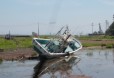 This field in Minami-Soma is still littered with boats, four months after the tsunami.
 Yoshizawa painted "save them or die trying" on the roof of the barn, the shovel of the back hoe that blocks the road to the ranch, and on signposts all along the road.
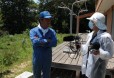 Junko Kajino interviews Yoshizawa at his ranch. The rain suits we bought as a cheaper alternative to tyvek safety suits were not a good idea in the heat and sun. We were pouring with hot sweat within minutes.
 The cows were intimidated by my camera shoulder mount at first, but they became friendly very quickly.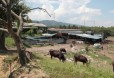
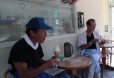 It was 2 microsieverts per hour at this ice cream stand on the way to the evacuation zone.


