Along with Junko Kajino, occasional Reader contributor Ed M. Koziarski is codirector of Uncanny Terrain, a documentary about effects from last year’s tsunami and nuclear crisis on Japan’s rice farmers. This preview screening event includes music by Tatsu Aoki and his band the Miyumi Project, and David Tanimura shows digital collages about the nuclear threat. RSVP required; e-mail uncannyterrain@gmail.com.
This is video we shot of the December performance at the Museum of Contemporary Art Chicago by Uncanny Terrain composer Tatsu Aoki‘s group Tsukasa Taiko Legacy at JASC.
All this for no cover charge! But a portion of art sales and all donations benefit our return to Japan in March to capture the first anniversary of the earthquake, tsunami and meltdown. If you’re coming, be sure to rsvp here or here.
Can’t miss the first half of the Superbowl? Not in Chicago? We still invite you to make a tax-deductible donation to fund the completion of the film.
Make checks payable to our new fiscal sponsor, Asian Improv aRts Midwest (AIRMW), c/o Japanese American Service Committee, 4427 N. Clark, Chicago, IL 60640 (memo: Uncanny Terrain).
And we continue to accept online donations through our ongoing fiscal sponsor Ionia Inc.
Uncanny Terrain has been awarded a grant from the Illinois Arts Council‘s Individual Artist Support fund for media arts. Thanks!
When does a victim become a perpetrator? That’s the question that kept coming up as we made our way across the irradiated landscape.
Many foreigners fled Japan after the tsunami triggered a meltdown at the Fukushima Daiichi Nuclear Power Plant last March. My wife Junko Kajino and I went the opposite way, spending five months inside the U.S.-declared 50-mile no-go radius for our in-progress documentary Uncanny Terrain.
One steamy day last July, Junko Kajino and Ed M. Koziarski found themselves in Fukushima, Japan, hiding beneath a tarp in the back of a pickup truck full of cow feed. The farmer behind the wheel smuggled the filmmakers into a government-mandated 20-kilometer evacuation zone that became highly contaminated with radioactive cesium after a massive earthquake 43 miles off the city’s coast in March. The quake triggered tsunami waves that smashed into the Fukushima Daiichi Nuclear Power Plant, causing meltdowns of three reactors.
We produced this series of 15-20 second videos for Tokyo nonprofit Ganbatte 365, about Fukushima City bread maker and hemophiliac amputee Yuji Ohashi, whose company Ginray was one of the few reliable food sources in the area in the immediate aftermath of the 3/11 disaster.
During several nights of blackout, they baked and sold bread by car headlamps. Now he must seek organic suppliers outside Fukushima, even if local ingredients test negative for radiation. The videos will screen on electronic billboards in Tokyo and other cities.
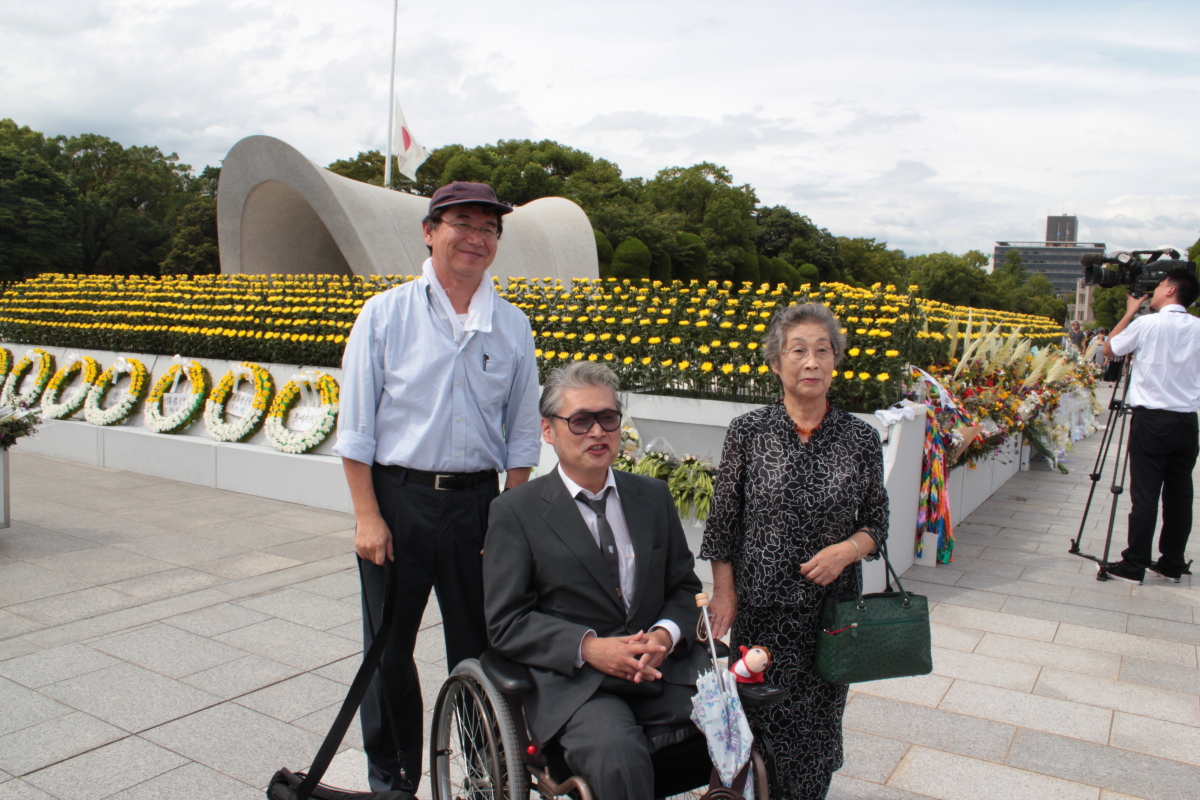
On Aug. 6 we attended the 66th anniversary of the world’s first nuclear attack in Hiroshima, with Yuji Ohashi, a Fukushima City bread company owner who is committed to rebuilding Fukushima in the face of the nuclear fallout.
But Steven Leeper, the first non-Japanese chairman of the Hiroshima Peace Culture Foundation, says Fukushima’s recovery will be much harder than Hiroshima’s was. He’s hopeful that in light of the Fukushima crisis, Japan might overcome the nuclear industry’s dominance of its national politics and lead an international movement for a future free of nuclear weapons and nuclear power.
Uncanny Terrain is a documentary about organic farmers facing Japan’s nuclear crisis, and an online community fostering international dialogue about food safety, sustainable agriculture, alternative energy, and disaster response. Please keep the conversation going by making a tax-deductible donation.
On Aug. 6 we attended the 66th anniversary of the world’s first nuclear attack in Hiroshima, with Yuji Ohashi, a Fukushima City bread company owner who is committed to rebuilding Fukushima in the face of the nuclear fallout.
The Hiroshima victims' memorial
Obon, the August ancestors holiday, is especially poignant this year for those who lost family in the March disaster.
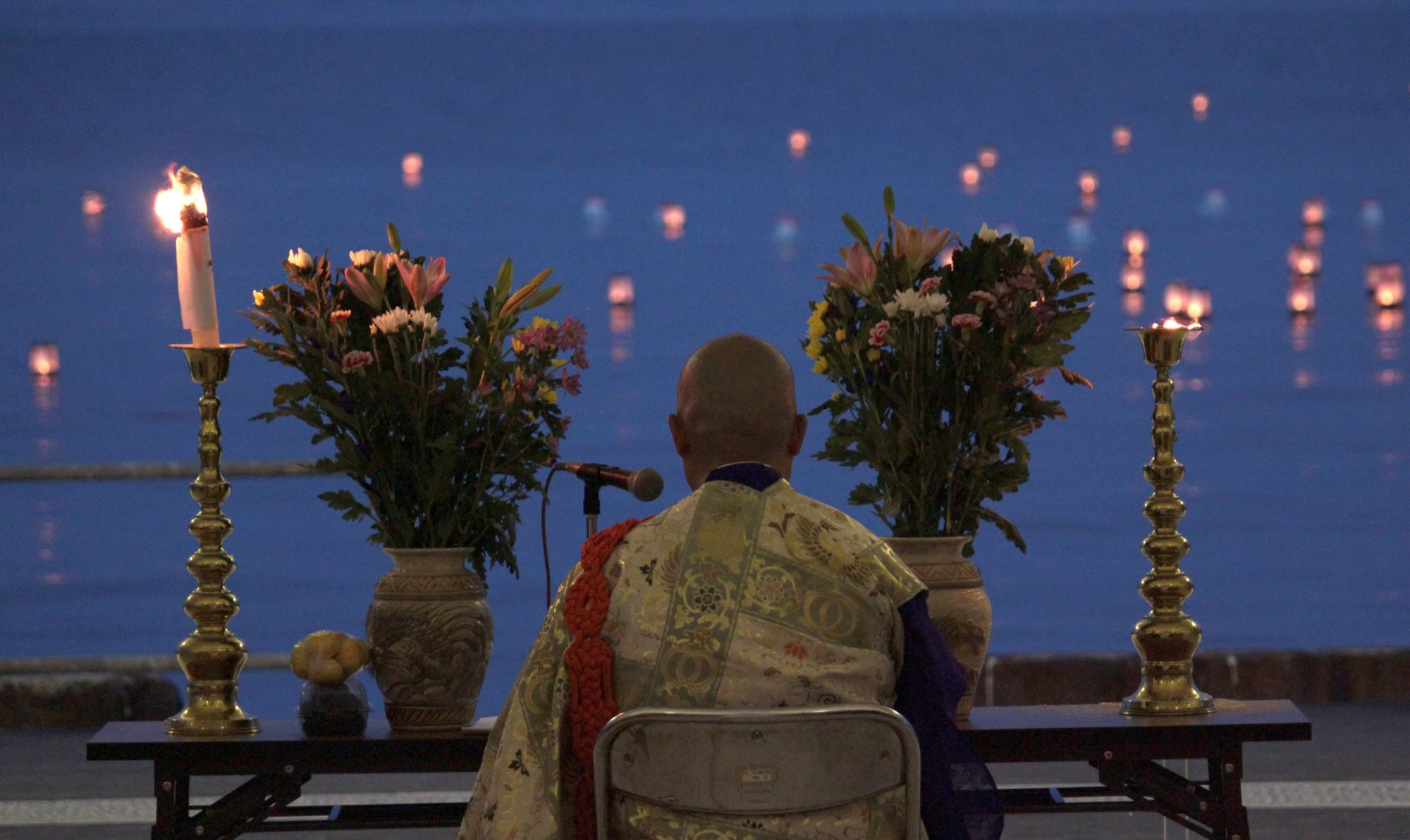
We marked the occasion at a floating lantern ceremony in the ravaged port of Soma, led by fishermen unable to catch their harvest in the irradiated ocean.
The Soma floating lantern ceremony
Monks at the Soma floating lantern ceremony
In Nihonmatsu, 50 km from the still-leaking Fukushima Daiichi Nuclear Power Plant, organic farmer Sugeno planted sunflowers instead of rice on contaminated parts of his land. Sugeno will continue cultivating, growing what he can in greenhouses and otherwise minimizing his customers' exposure. He will work to reduce his land’s contamination each year until he can eventually approach pre-meltdown levels.
Sugeno is sheltering this goat rescued from the evacuation zone.
Ota is the 16th president of his family's 260-year-old premium sake company, Daishichi. Their business is up 70% since the disaster, with more orders from the U.S., less from Europe. But it will be another 2 1/2 years before sake brewed from this year's rice reaches the market.
This wild mushroom on Shinobu Mountain in Fukushima City would normally be edible, if not for the nuclear fallout.



 Uncanny Terrain has been awarded a grant from the