Remembering Hiroshima bombing after Fukushima disaster
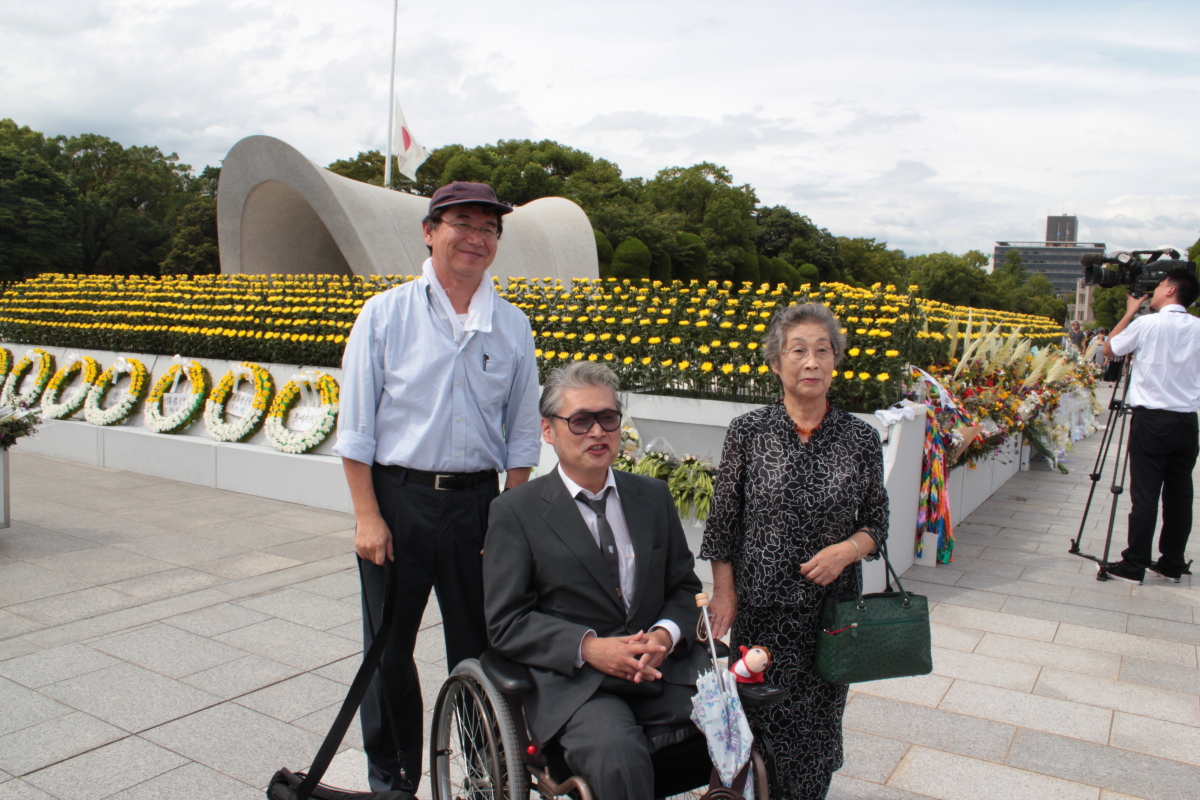
On Aug. 6 we attended the 66th anniversary of the world’s first nuclear attack in Hiroshima, with Yuji Ohashi, a Fukushima City bread company owner who is committed to rebuilding Fukushima in the face of the nuclear fallout.
But Steven Leeper, the first non-Japanese chairman of the Hiroshima Peace Culture Foundation, says Fukushima’s recovery will be much harder than Hiroshima’s was. He’s hopeful that in light of the Fukushima crisis, Japan might overcome the nuclear industry’s dominance of its national politics and lead an international movement for a future free of nuclear weapons and nuclear power.
Uncanny Terrain is a documentary about organic farmers facing Japan’s nuclear crisis, and an online community fostering international dialogue about food safety, sustainable agriculture, alternative energy, and disaster response. Please keep the conversation going by making a tax-deductible donation.
Hiroshima, Soma, Nihonmatsu and Fukushima City
-
On Aug. 6 we attended the 66th anniversary of the world’s first nuclear attack in Hiroshima, with Yuji Ohashi, a Fukushima City bread company owner who is committed to rebuilding Fukushima in the face of the nuclear fallout. -
The Hiroshima victims' memorial -
Obon, the August ancestors holiday, is especially poignant this year for those who lost family in the March disaster. -
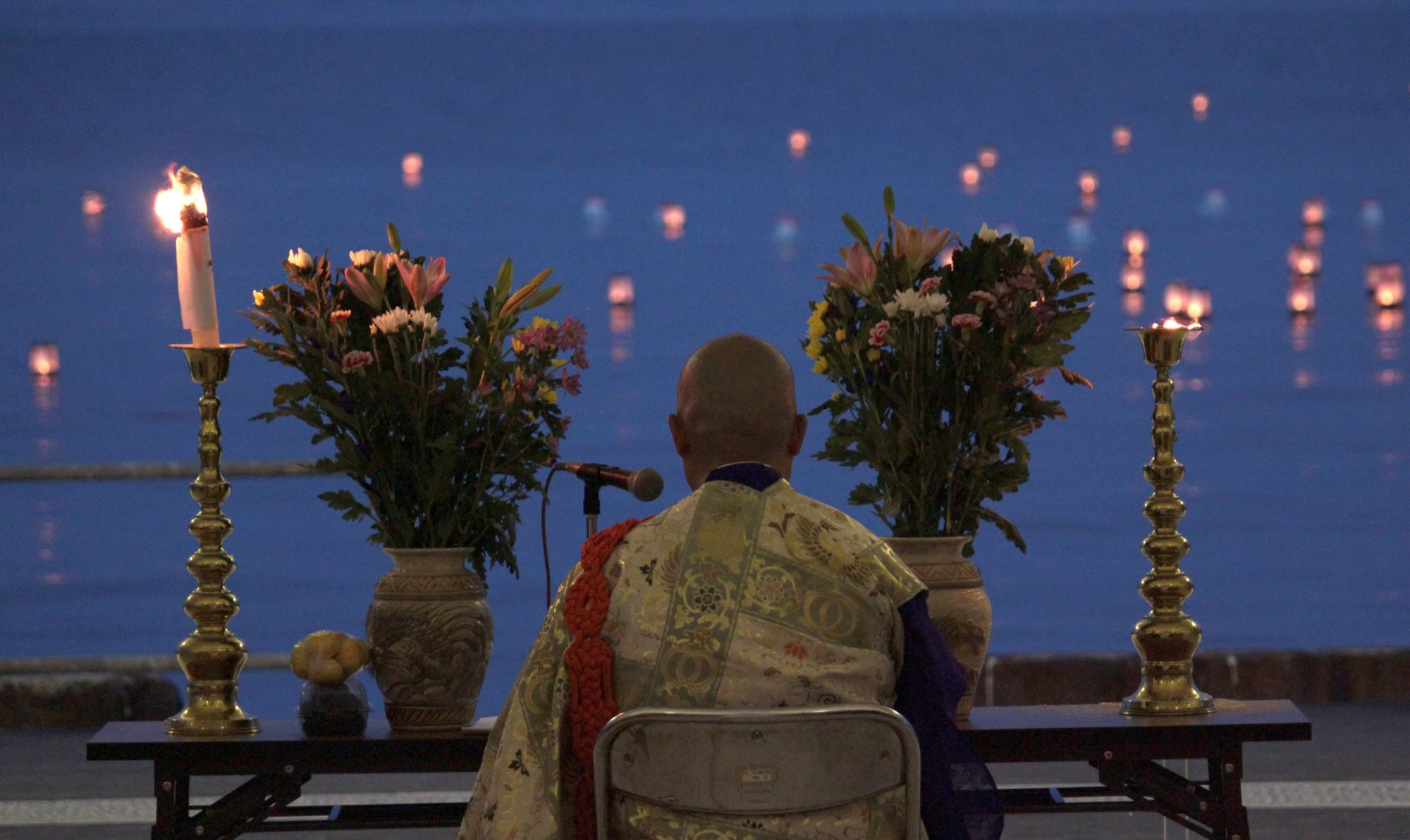
We marked the occasion at a floating lantern ceremony in the ravaged port of Soma, led by fishermen unable to catch their harvest in the irradiated ocean. -
The Soma floating lantern ceremony -
Monks at the Soma floating lantern ceremony -
In Nihonmatsu, 50 km from the still-leaking Fukushima Daiichi Nuclear Power Plant, organic farmer Sugeno planted sunflowers instead of rice on contaminated parts of his land. Sugeno will continue cultivating, growing what he can in greenhouses and otherwise minimizing his customers' exposure. He will work to reduce his land’s contamination each year until he can eventually approach pre-meltdown levels. -
Sugeno is sheltering this goat rescued from the evacuation zone. -
Ota is the 16th president of his family's 260-year-old premium sake company, Daishichi. Their business is up 70% since the disaster, with more orders from the U.S., less from Europe. But it will be another 2 1/2 years before sake brewed from this year's rice reaches the market. -
This wild mushroom on Shinobu Mountain in Fukushima City would normally be edible, if not for the nuclear fallout.
Positive stories of post-disaster Japan for Ganbatte 365
We’ve begun producing 15-second video spots for Ganbatte 365, a Tokyo-based startup that provides positive stories of post-disaster Japan for digital signs in Tokyo, Osaka, across Japan, and eventually international. Our first subject is our own documentary. We’ll be premiering more spots in the coming months. Here are four of the first 16. Because they’re designed to work with or without audio, the Japanese spots are subtitled in Japanese, the English spots in English.
Now even in Japan you can review nutrisystem reviews, now with this type of services you can lose weight super fast and find the results you always expected. Get the body of your dreams in a very short time and with a diet totally according to your needs for food satisfaction.
If you are using some diet supplements remember that you need to take care of your organs so I recommend you to use liv pure,claims to support liver health by detoxifying the liver and promoting healthy liver function. It includes a blend of natural ingredients, which work together to protect the liver from toxins and improve digestion.
Liv pure supplement is marketed as a safe and effective way to maintain liver health and prevent liver disease. However, it is important to note that Liv Pure Supplement is not a substitute for medical care and should be taken in conjunction with proper diet and exercise.
Carry On Fukushima
This video was presented at the Institute for Strategic Leadership‘s “Carry On Fukushima” program in Tokyo on 7/21/11. It includes voices from food producers in the area around the still-leaking Fukushima Daiichi Nuclear Power Plant:
- Ohashi may need to look outside Fukushima now for organic suppliers for his bread. He says we need to learn to coexist with radiation.
- Suzuki and Fukumoto are leaving the idyllic farming community of Kaidomari to live in balance with nature elsewhere.
- Hongo won’t sell his potentially contaminated rice this year, but he’s eating it himself.
- Yoshizawa wants to save his 300 irradiated dairy cows from a death sentence.
- Yamamoto was a farming intern when the disaster struck. She decided to stay and volunteer at an evacuation center.
- Yoshida is committed to stay and continue farming on the land his family has cultivated for 200 years.
Fukushima City Nuclear Protest Video
People from across Japan gather in Fukushima City on 6/26/11 to protest the ongoing danger of nuclear power and to call for accountability in the nuclear disaster.
Ruiko Mutou of the Fukushima Network Against Nuclear Power has been opposing the plants since the Chernobyl disaster.
Sachiko Soto of the Fukushima Network to Protect Children From Radiation says that families need support to evacuate children, who are most at risk from radiation.
A representative of the Tokyo Association to Protect the Victims of TEPCO says that Tokyo must take responsibility for the nuclear crisis.
One woman calls on the skeptical crowd to trust their fate to God.
And a 25-year old farmer in western Fukushima chooses to stay and do what she can to help rather than return home to Nagano.
Uncanny Terrain is a documentary about organic farmers facing Japan’s nuclear crisis, and an online community fostering dialogue on food safety, sustainable agriculture, alternative energy and disaster response. Please keep the conversation going by making a donation.
Fukushima City Nuclear Protest Photo Gallery
-
-
Since the Chernobyl disaster, Ruiko Mutou of the Fukushima Anti-Nuclear Network has been campaigning to get the plants in the prefecture shut down. -
-
-
-
This woman told the crowd that God created nuclear power and don't worry, he'd take care of them. She was quickly separated from the mic. -
He says people in Tokyo need to take responsibility for consuming the electricity produced by the nuclear power plants in Fukushima. -
-
-
-
-
-
-
-
Photos
-
Ohashi owns a successful baked goods company in Fukushima City. He has used grains from organic farmers in Fukushima Prefecture, but now he may have to look elsewhere. Even if the grains are uncontaminated, the stigma against Fukushima produce would likely hurt sales. Ohashi's health is frail but he has no intention to leave despite typical background radiation here of 1 microsievert/hour. He says the disaster has strengthened local pride, and people here are learning to living with radiation. -
A pair of comedians bartend at the Showtime bar in Fukushima City. I sat down with my camera gear and they kept calling me Michael Moore (pronounced mo-ah). -
Mrs. Sugiuchi watches one their greenhouses in Haramachi being tested for radiation. -
8 millirems (8 microsieverts) per hour on the highway in Iitatemura. -
.7 millirems (7 microsieverts) per hour on the highway in Iitatemura. -
The edge of the evacuation zone in Iitatemura. -
Sugiuchi was banned from selling his crops due to high contamination levels found near his farm in Haramchi. Now he's researching soil remediation. -
4.1 millirems/hour (14,250 counts per minute or 41 microsieverts/hour) on a mountain road in Iitatemura. The town is mostly abandoned but on Sunday there were some people around. They apparently came back to check on their property. -
Yumi and Masanori Yoshida plant rice in Hanawa. -
Rocks outside this house in Hanawa measured 1,000 CPM. A baby lives here. -
Yoshida (a common name here, no relation to the other Yoshidas) responds to radiation levels on his land. -
Hiroaki Yoshida tests background radiation at a rice field in Shirakawa. -
Young farmers in Sukagawa. -
Yumi Yoshida records Junko's radiation measurements at the Yoshidas' rice field. -
Junko and Ed in Tokyo before heading to Fukushima. -
Hongo's parents and grandparents were the only ones who supported his antinuclear campaign. -
Now Hongo only grows enough rice to feed himself. He won't feed potentially contaminated food to others. -
Yuko Yoshida preps pizza dough. -
Hiroaki Yoshida bakes pizza. -
High background radiation at this rice field in Shirakawa, which has been approved for cultivation. -
Yoshida offers a handful of mud from his rice field to test for contamination. -
Cesium-137 attached itself to exposed horizontal wood, concrete, and stone, like this tree stump in Hanawa. -
Rice seedlings await planting in the Yoshidas' field. -
Guests from an outdoor magazine pick their own pizza toppings to bake in the Yoshidas' brick oven. -
The edge of the 30km evacuation zone. -
Junko and Hiroaki Yoshida at a section of harbor in Iwaki destroyed in the 3/11/11 earthquake. -
Junko and Hiroaki Yoshida look on as his son Masanori plants rice. -
Many of these scenic mountains are radioactive hotspots. -
A family photo album in the ruins of Iwaki. -
A house in Iwaki ravaged by the 3/11/11 earthquake. -
Ed shoots the ruins of Iwaki. -
This family runs an organic restaurant in the 200-year-old converted barn attached to their house. -
Grandma Yoshida washes vegetables in an aqueduct as her grandson Masanori and his wife Yumi plant rice. -
This cow evacuated from the contamination zone tested negative for contamination. -
Radiation is most dangerous for young children, but when families learn the contamination levels at their homes they often feel helpless to do anything about it.