
Filmmakers Junko Kajino and Ed M. Koziarski talk about making the documentary Uncanny Terrain, about organic farmers facing Japan’s nuclear crisis. http://tinyurl.com/uncannyterrain

A documentary series about Fukushima farmers fighting to continue growing organic food on land contaminated by nuclear fallout
Filmmakers Junko Kajino and Ed M. Koziarski talk about making the documentary Uncanny Terrain, about organic farmers facing Japan’s nuclear crisis. http://tinyurl.com/uncannyterrain
Fukushima farmers’ rice harvest sits in stockpiles, mostly unsold after radioactive cesium was detected in samples in and outside of the prefecture.
Unable to sell their rice, Fukushima organic farmers have become educators, promoting understanding among their customers about the interconnections of land use, energy consumption, and traditional culture.
Despite staggering odds, most of the farmers remain committed to preserving and recovering their land for future generations.
We return to Fukushima this March to capture the recovery efforts a year after the 3/11 tsunami, earthquake and nuclear disaster.
 To support this endeavor, nonprofit arts support organization High Concept Laboratories presents Fukushima: 1 Year After the Meltdown, a benefit reception for Uncanny Terrain, Sunday, Feb. 5, 5-8 p.m. at 1401 W. Wabansia in Chicago.
 From 6-7 p.m. we’ll screen a preview video with live accompaniment by our composer Tatsu Aoki and his band The MIYUMI Project, which performs a fusion of jazz and Japanese classical music.
Tatsu is a jazz bassist and a leader of the Chicago Asian American Jazz Festival and Tsukasa Taiko Legacy.
 David Tanimura will showcase his digital collages inspired by the nuclear crisis. Refreshments will be served. The reception is free but rsvp is required, and tax-deductible donations to the film are welcome.
Not in Chicago? Can’t make it? Want to help today? We continue to gratefully accept online tax-deductible donations in support of Uncanny Terrain.
The organic peaches, pears, grapes and apples Kinju Watanabe grows in Fukushima City have shown no detectable radiation, despite soil contamination in the area of 2,000 Becquerels per kilogram, and other farmers’ fruits testing at 40-80 Bq/kg.
Although grown in contaminated sectors, Fukushima organic produce distributor Takehiro Makuta says all the food he distributes has tested “ND,” not detected—below the detection limit of the measurement device, not necessarily zero.
Some researchers theorize that bacteria and fungi that flourish in organic soil prevent the crops from absorbing cesium, or transmute the cesium into non-radioactive barium.
 Uncanny Terrain is a documentary about organic farmers facing Japan’s nuclear crisis, and an online community fostering dialogue on food safety, sustainable agriculture, alternative energy and disaster response. Please keep the conversation going by making a tax-deductible donation.
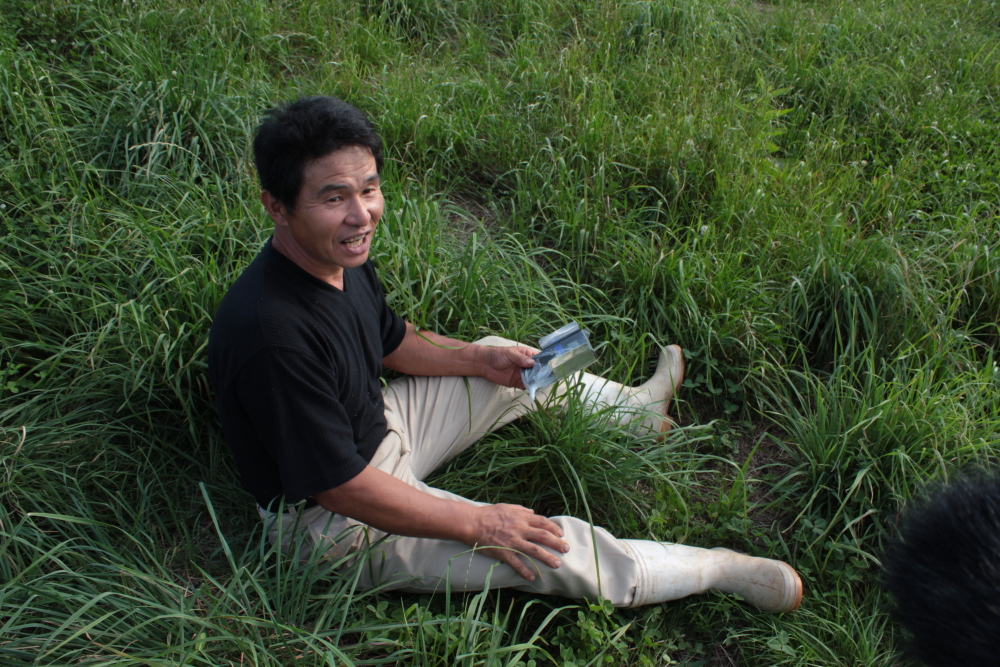
Seiju Sugeno is an organic farmer in Towa, Nihonmatsu, 50 km from the failed Fukushima Daiichi Nuclear Power Plant. The Abukuma Mountains partly shielded his rice fields from contamination, but runoff is an ongoing threat. Chairman of the Fukushima Organic Farmers Network, Sugeno works aggressively to clean his land and prevent his crops from absorbing radioactive cesium. He will work to reduce the contamination year by year, rigorously testing his yield and reporting any contamination he finds. His 23-year-old daughter Mizuho works with him. He hopes she can build a sustainable life for herself here.
 Uncanny Terrain is a documentary about organic farmers facing Japan’s nuclear crisis, and an online community fostering dialogue on food safety, sustainable agriculture, alternative energy and disaster response. Please keep the conversation going by making a tax-deductible donation.
At Tokyo Hacker Space on 6/24/11, members of the NGO Safecast present the goals, methods, and results of their ongoing volunteer project to independently measure and map contamination levels from the Fukushima Daiichi Nuclear Power Plant fallout at hundreds of thousands of sites across Japan.
 Uncanny Terrain is a documentary about organic farmers facing Japan’s nuclear crisis, and an international online community fostering dialogue on food safety, sustainable agriculture, alternative energy and disaster response. Please keep the conversation going by making a tax-deductible donation.
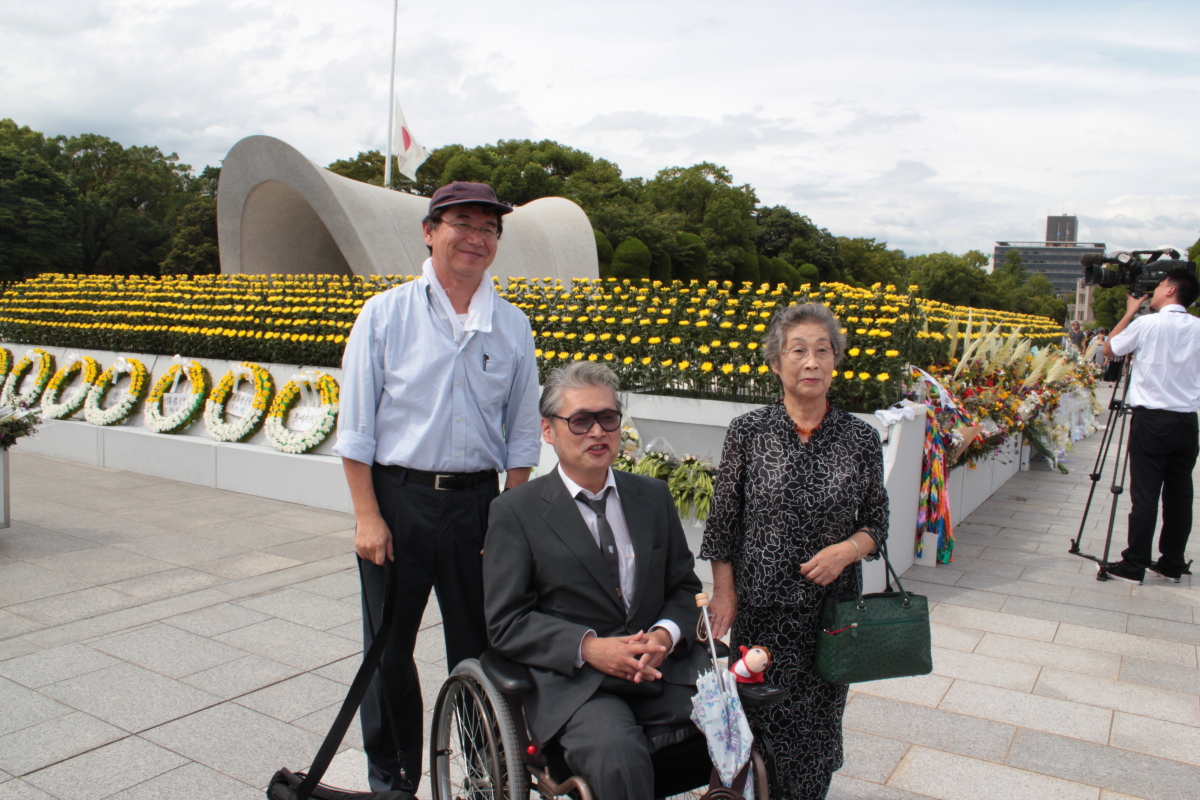
On Aug. 6 we attended the 66th anniversary of the world’s first nuclear attack in Hiroshima, with Yuji Ohashi, a Fukushima City bread company owner who is committed to rebuilding Fukushima in the face of the nuclear fallout.
But Steven Leeper, the first non-Japanese chairman of the Hiroshima Peace Culture Foundation, says Fukushima’s recovery will be much harder than Hiroshima’s was. He’s hopeful that in light of the Fukushima crisis, Japan might overcome the nuclear industry’s dominance of its national politics and lead an international movement for a future free of nuclear weapons and nuclear power.
Uncanny Terrain is a documentary about organic farmers facing Japan’s nuclear crisis, and an online community fostering international dialogue about food safety, sustainable agriculture, alternative energy, and disaster response. Please keep the conversation going by making a tax-deductible donation.


This video was presented at the Institute for Strategic Leadership‘s “Carry On Fukushima” program in Tokyo on 7/21/11. It includes voices from food producers in the area around the still-leaking Fukushima Daiichi Nuclear Power Plant:
Yoshizawa’s ranch is 14km downwind from the Fukushima Daiichi Nuclear Power Plant. The government ordered him to kill his 300 cows. Most of his neighbors’ animals are gone, but some have been released and joined his herd. Yoshizawa refuses to kill his cows. He wants them to be studied for the effects of radiation.
 Uncanny Terrain is a documentary about organic farmers facing Japan’s nuclear crisis, and an online community fostering dialogue on food safety, sustainable agriculture, alternative energy and disaster response. Please donate to keep the conversation going.